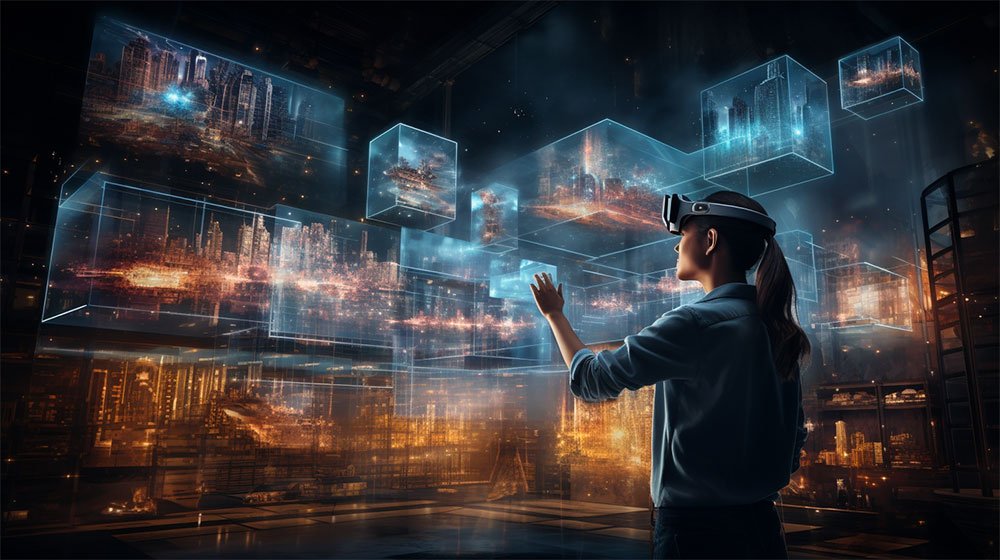
Spatial computing is no longer a concept of the future it is rapidly shaping the way we interact with the digital and physical worlds. By blending augmented reality (AR), virtual reality (VR), the Internet of Things (IoT), and artificial intelligence (AI), spatial computing creates immersive experiences that are transforming everyday life, business, and industry.
What is Spatial Computing?
Spatial computing refers to a set of technologies that bridge the physical and digital realms, allowing computers to perceive, interpret, and respond to real-world environments. It goes beyond traditional computing by enabling interactions with digital content in three-dimensional space.
Examples include AR overlays on real-world objects, VR environments, and smart devices connected through IoT networks that respond intelligently to users’ actions.
Key Technologies Driving Spatial Computing
- Augmented Reality (AR): Enhances real-world experiences by overlaying digital information onto physical objects.
- Virtual Reality (VR): Creates fully immersive digital environments for gaming, training, and virtual meetings.
- Internet of Things (IoT): Connects everyday objects to collect and share data, enabling intelligent responses.
- Artificial Intelligence (AI): Powers real-time analytics, predictive modelling, and context-aware interactions.
Applications in Daily Life
Spatial computing is transforming how we live, learn, and work:
- Education: Virtual classrooms and interactive learning experiences bring complex concepts to life.
- Healthcare: AR-assisted surgeries, remote patient monitoring, and real-time diagnostics improve patient outcomes.
- Entertainment: Immersive gaming, virtual concerts, and interactive experiences engage audiences like never before.
- Retail & E-commerce: Virtual try-ons, digital showrooms, and personalised AR experiences enhance customer engagement.
Spatial Computing in Business
Businesses are leveraging spatial computing to improve efficiency, collaboration, and customer experiences:
- Remote Collaboration: Teams can meet in virtual environments, reducing travel and enhancing communication.
- Operations & Logistics: AR-guided warehouse management and IoT-driven monitoring improve productivity.
- Customer Engagement: Interactive virtual showrooms and product demos create memorable experiences.
Future Trends & Challenges
- AI Integration: Autonomous AI agents will further enhance real-time spatial interactions.
- Privacy Concerns: Collecting and processing spatial data raises new security and privacy challenges.
- Hardware Adoption: Advanced AR/VR devices must become more affordable and accessible to see mass adoption.
Why Spatial Computing Matters in 2025
The convergence of AR, VR, IoT, and AI promises a future where physical and digital experiences seamlessly blend. For the UK market, businesses and individuals who adopt spatial computing early stand to benefit from increased productivity, immersive learning, and innovative ways to engage audiences.
Conclusion
Spatial computing is redefining our interactions with technology. From immersive education and healthcare solutions to smarter workplaces and retail experiences, its impact is poised to grow in 2025 and beyond. Embracing spatial computing today means staying ahead in a rapidly evolving digital landscape.