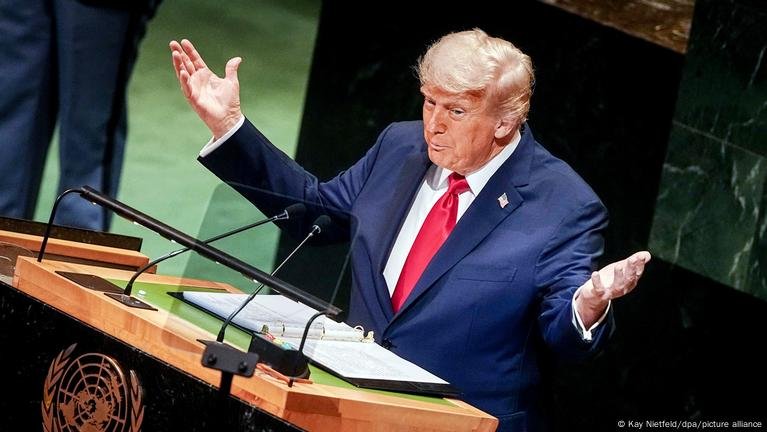
Donald Trump made a dramatic return to the United Nations General Assembly, delivering a speech that was part grievance, part showmanship. Below are five key takeaways — and why they might matter going forward.
1. A Scathing Critique of the UN
Trump opened his address with sharp criticism of the UN, accusing it of offering “empty words” that fail to resolve conflicts. He contended that the organisation has yet to live up to its potential, suggesting that its promise is undermined by inaction. Early in the speech, he quipped that the only things he received from the UN were “a bad escalator and a bad teleprompter,” referencing technical glitches during his entrance.
2. Framing Himself as a Peacemaker
Despite his criticisms, Trump spent much of the hour-long speech emphasising the wars he claims to have ended since returning to office — seven in total. He repeatedly called for recognition of these efforts, even suggesting that he deserves a Nobel Peace Prize. For him, though, the real “prize” isn’t an accolade, but lives saved and children growing up without war.
3. India and China Drawn into the Ukraine Debate
In a provocative turn, Trump alleged that India and China, by purchasing Russian oil, are acting as “primary funders” of the war in Ukraine. He urged European nations to impose harsher sanctions on Russia and those who deal with it, including countries in Europe itself. He claimed that a “very strong round of powerful tariffs” could quickly halt the bloodshed.
4. Gaza Statehood and Western Responses Questioned
Trump criticised moves by US allies, especially in Europe, to recognise a Palestinian state. He characterised this recognition as a “reward” to Hamas for its actions during the October 2023 attack on Israel. For Trump, such diplomatic gestures amount to rewarding groups for violence, rather than discouraging it.
5. A Shift in Tone on the Ukraine Conflict
Perhaps the most striking aspect of Trump’s address was a more assertive posture towards Russia. He warned of powerful tariffs unless President Putin returns to the negotiating table. Moreover, Trump asserted that Ukraine, supported by NATO, could reclaim all lost territory — a bolder claim than earlier positions might suggest.
Why This Matters
- Diplomatic Credibility & Norms: Trump’s criticisms of the UN’s functionality could undermine confidence in international institutions — especially when coming from a major power. If world leaders follow this framing, it might erode collective trust in multilateralism.
- Global Realignments & Blame: By calling out India and China, Trump seeks to shift narratives about who bears responsibility for the Ukraine war. This could increase pressure on those nations diplomatically and economically, possibly pushing them towards different alliances or policies.
- Domestic & Global Messaging: The speech reinforces Trump’s self-portrayal as a strongman leader who delivers results and fights what he sees as hypocrisy. Domestically, this message may appeal to his base; internationally, however, it may heighten tensions with allies who prefer multilateral, rules-based international order.
- Risk of Polarisation: Blunt rhetoric, especially around sensitive topics such as Gaza or diplomacy with Russia, risks further dividing opinion both within the US and globally. Allies may publicly distance themselves or push back quietly.
My Take
Trump’s UN address isn’t just about making noise — it’s about setting the agenda. He appears keen to reshape global alignments, emphasise transactional diplomacy, and challenge institutions he sees as underperforming. Although bold declarations and theatrical moments (bad escalator, bad teleprompter) serve as sound-bites, they also reflect a deeper strategy: to position himself as both critic and reformer of the international order.
Whether this rhetoric translates into policy changes, shifts in alliances, or adjusted behavior from other nations remains to be seen. But one thing is clear: Trump wants to be seen not merely as a participant in global forums, but as an instigator of their transformation.