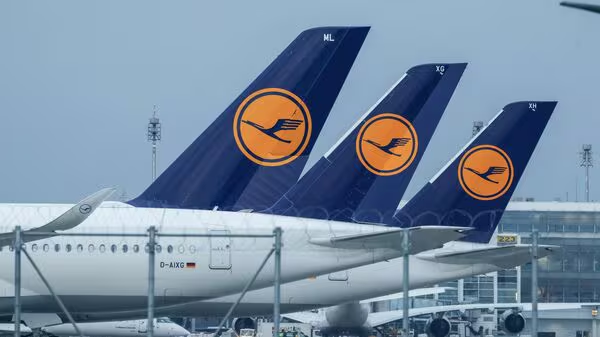
Late on Thursday evening, Munich Airport in Germany was forced to suspend flight operations following multiple drone sightings. The sudden disruption led to flight cancellations, diversions, and widespread passenger inconvenience.
Flight operations were first restricted around 10:18 pm local time, before being fully halted. In total, 17 departing flights were cancelled, while 15 arriving flights were diverted to alternate airports such as Stuttgart, Nuremberg, Vienna and Frankfurt.
About 3,000 passengers were impacted by the disruption. The airport remained closed overnight, reopening early Friday morning with the first arrivals and departures resuming soon after.
Authorities have launched investigations into the origin and intent behind the drone incursions. This incident follows recent similar disturbances across European airports — raising urgent questions about airspace security and drone control measures.
Key Details & Chronology
- Drone sightings were observed around 10:18 pm, prompting restriction and eventually suspension of operations.
- The airport stayed closed until approximately 4:59 am local time the next day.
- The first flight arrivals were scheduled from about 5:25 am, and the first departures around 5:50 am.
- Diversions affected flights from multiple directions, adding stress to already complex logistics.
- Munich was already in a heightened state of alert, having faced earlier disruptions such as a bomb threat during Oktoberfest.
- Some nations, including Denmark, have suggested possible Russian involvement in drone incidents. EU leaders are now pushing for stronger defenses against drone threats in European airspace.
Why This Incident Matters
- Escalating drone threats: Airports across Europe have seen increased drone activity, making such disruptions more frequent.
- Airspace security under strain: Detecting, attributing and responding to drone incursions remains challenging, especially at major aviation hubs.
- Operational vulnerability: Even short suspensions have ripple effects — cancellations, delays, passenger distress, rerouting complexity.
- Geopolitical overtones: With allegations of foreign involvement, drone incursions may increasingly intertwine with national security concerns.
- Need for countermeasures: Airports, nations and EU agencies may need to accelerate drone detection, tracking, and neutralisation systems.
Suggested FAQs
Q1. What caused the shutdown at Munich Airport?
Multiple drone sightings in the vicinity triggered a temporary suspension of flight operations for safety reasons.
Q2. How many flights were affected?
Seventeen departing flights were cancelled, and fifteen arriving flights were diverted.
Q3. How many passengers were impacted?
Around 3,000 passengers were affected by the cancellations and diversions.
Q4. How long was the airport closed?
Operations were halted late Thursday night and resumed early Friday morning after several hours of closure.
Q5. What measures are authorities taking?
Investigations are underway to identify drone origin and intent. EU leaders are also calling for stronger counter-drone defences.
Q6. Could this signal larger geopolitical issues?
Yes. Some countries have linked recent drone incidents to cross-border interference, fuelling debates over airspace sovereignty and drone regulation.