Hey there, Tech Enthusiasts!
Ever wondered what the future looks like? Forget flying cars for a moment. What if your next phone call, your next photo, or even your next Google search didn’t need you to pull a phone out of your pocket? What if all you had to do was look at something and speak? Well, it seems like that future is already here, and it’s being designed by none other than Meta, the company behind Facebook and Instagram. They’re not just dabbling in this space; they’re betting big on it with their new, expanded line of AI-powered smart glasses.
This isn’t just a small update; it’s a huge, strategic move. Mark Zuckerberg, the main man at Meta, believes that these smart glasses aren’t just a cool gadget. He thinks they are the “next major computing platform,” something that could one day replace our beloved smartphones.
But wait, why glasses? Why not just keep upgrading phones? The answer is simple: convenience and seamless integration. Think about it. Our phones are great, but they still act as a barrier between us and the real world. You have to stop what you’re doing, pull out the phone, unlock it, open an app, and then get the information you need. With smart glasses, all of this happens in real-time, right in front of your eyes.
Meta’s journey into smart glasses isn’t new. They’ve been working on this for a while, and their partnership with EssilorLuxottica, the company that owns popular brands like Ray-Ban and Oakley, has been a masterstroke. This collaboration, which started back in 2019, has helped them blend technology with style. The result is a pair of glasses that don’t look like something straight out of a sci-fi movie. They look cool, they feel comfortable, and they pack a lot of power.
Their first big hit in this category, the Ray-Ban Meta smart glasses, became the best-selling AI glasses in the world. And it’s easy to see why. You can take hands-free photos and videos, talk to a digital assistant, and even get real-time language translations. Imagine traveling to a new country and having a conversation with a local, with the glasses translating for you on the fly. That’s some next-level stuff!
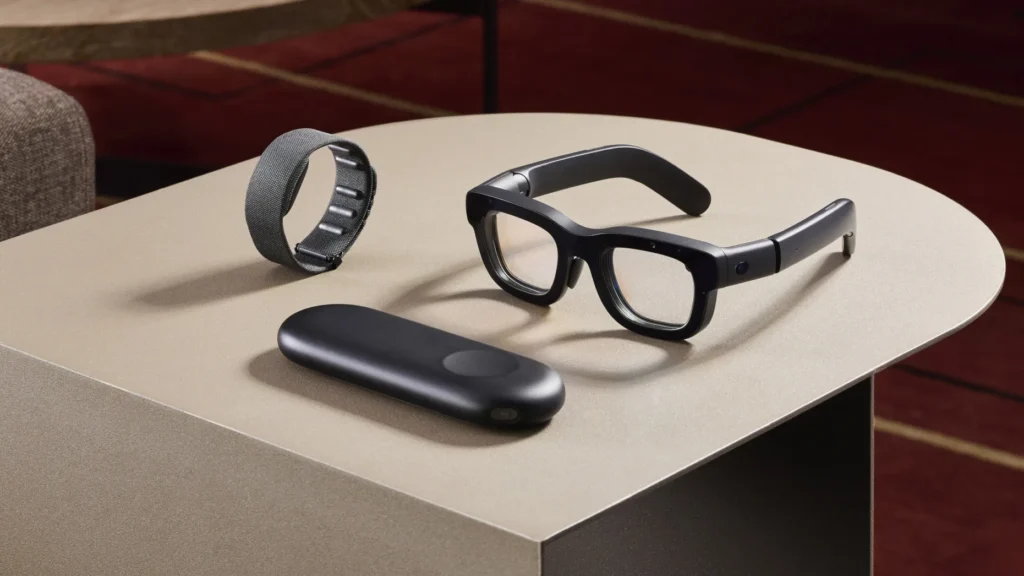
Now, they’re taking it up a notch. The new lineup includes the Ray-Ban Display smart glasses and the Oakley Meta Vanguard glasses. The Ray-Ban Display model, which costs around $799, has a built-in screen that can show you messages and photos without you having to look at your phone. Plus, they come with these cool “neural bands” that let you control things with just finger movements. This is a game-changer for someone who’s always on the go.
For the fitness freaks and athletes out there, the Oakley Meta Vanguard glasses are the perfect fit. Priced at $499, they have an action-ready camera and can connect with your fitness apps. Imagine recording your whole cycling route or your intense workout session from your own point of view, without having to hold a phone or a GoPro. This is exactly what Meta is aiming for—to make technology a natural extension of ourselves.
Of course, this journey isn’t without its challenges. Meta’s Reality Labs unit, which is responsible for all this cool tech, has been losing a lot of money. But despite the financial losses, Zuckerberg is sticking to his guns. He sees this as a long-term investment. He wants Meta to break free from its dependence on big rivals like Apple and Google. By creating its own platform, Meta can control its own future and not be at the mercy of others.
And the market trends are also on their side. The smart glasses market is growing at a crazy pace. Last year, it was a nearly $2 billion market, and experts predict it will balloon to a massive $8.26 billion by the end of the decade. This shows that people are ready and eager for this kind of technology. The potential is huge, and Meta is trying to get ahead of the curve.
So, what does this all mean for us, the everyday users? It means a future where technology is less of a distraction and more of a helper. Instead of staring down at a small screen, we will be able to interact with the digital world while still being present in the real one. It’s about merging our two realities—the physical and the digital—into one seamless experience.
Imagine a world where you’re walking through a museum, and your glasses instantly give you information about the paintings you’re looking at. Or you’re cooking, and the glasses project a recipe right in front of you, with step-by-step instructions. This is the kind of future Meta is building, and their new AI glasses are the first big step in that direction.
In a way, Meta isn’t just selling a product; they are selling a vision. A vision of a world where technology is invisible yet powerful, always there when you need it, and never in the way. It’s a bold bet, and while it might be a bit risky, the potential rewards are immense. The question isn’t whether smart glasses will be a thing—it’s whether Meta will be the one to make them a part of our daily lives, just like they did with social media. Only time will tell, but one thing is for sure: the future is looking a lot clearer through a pair of smart glasses.